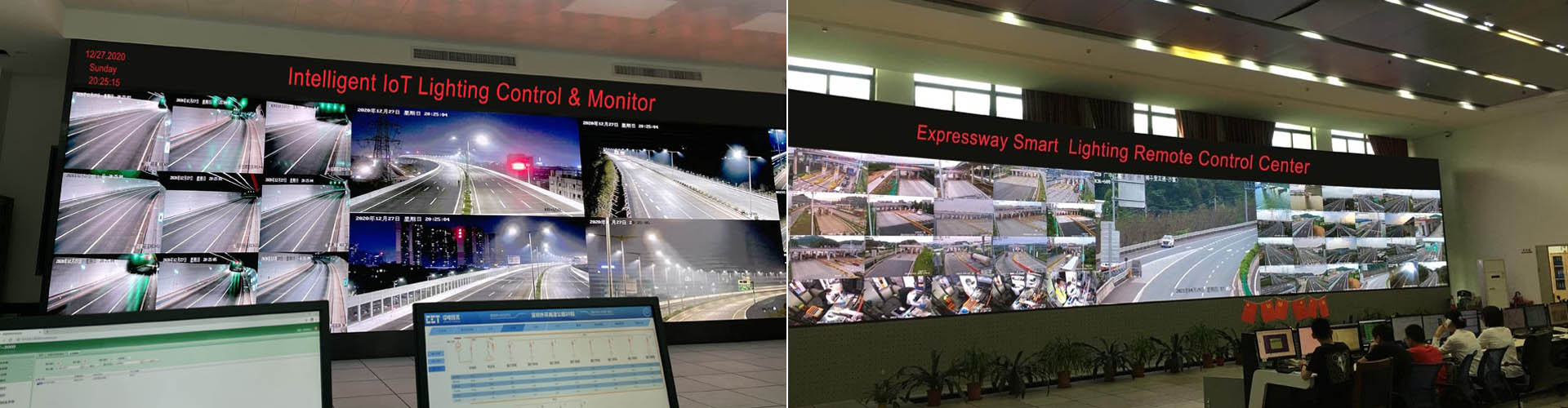
For Papua New Guinea, Pacific island countries, Southeast Asian island roads, African municipal projects and remote government lighting zones, the street lighting problem is not only illumination. The real field problem may include unstable grid power, weak mobile signal, telecom base-station outages, battery theft, cable cutting, unauthorized dismantling and delayed manual inspection.
In this type of project, a solar street light should not be selected only by LED wattage, solar panel size or battery capacity. The owner should also ask whether the lighting asset can remain identifiable, report abnormal status, support online records and continue basic operation when the external environment is unstable.
CAT 1 anti-theft monitoring and asset tracking is the core value of this solution: the controller uses an internal SIM card, communicates directly with the cloud platform, and can stay online through the street light battery for 24-hour asset monitoring when network coverage is available.
CAT 1 solar street light anti-theft monitoring means the street light controller uses an internal SIM card to communicate directly with the cloud platform. When powered by the street light battery, the controller can send and receive data online, support 24-hour status monitoring, report alarm records and help the owner trace abnormal operation or unauthorized movement more quickly than manual inspection.
This does not mean every field risk disappears. Mobile network coverage, battery energy reserve, installation quality and platform settings still matter. But compared with Bluetooth-only or manual-inspection-only products, CAT 1 direct cloud communication gives the owner a stronger way to monitor road lighting assets in unstable-grid and high-theft-risk regions.
In many island and developing regions, grid supply may be unstable, voltage quality may be poor, and long outages may happen during storms, rainy seasons or local feeder problems.
Mobile signal may be weak along rural roads, hill roads, coastal highways and outer-island project areas. Telecom base stations may also lose power during wider outages.
Some project owners face battery removal, cable cutting, solar panel theft, unauthorized dismantling or even complete luminaire loss after handover.
Traditional solar street light comparison often starts with four questions: how many watts, how many lumens, how many hours, and how many cloudy days. These questions are still important, but they are not enough for government road projects in unstable regions.
If a 50-set government project is installed in a remote district, the owner may face a different problem after acceptance. The lamps may be far apart, inspection teams may not visit every road every night, network signal may be unstable, and missing assets may be discovered only after public complaints. In this case, the lowest purchase price can become an expensive long-term project risk.
| Project Question | Ordinary Product Review | More Useful Review for Weak-Grid Regions |
|---|---|---|
| Will the road be bright? | Check LED wattage and lumen output. | Check lighting schedule, dimming logic, battery reserve, grid backup option and local fallback behavior. |
| Will the system survive outages? | Increase battery capacity or use larger solar panel. | Balance solar charging, battery protection, grid backup, local control and alarm records. |
| Will the owner know if assets are missing? | Depend on manual inspection. | Use device identity, online status, abnormal operation records and CAT 1 cloud communication. |
| Will Bluetooth maintenance be enough? | Technician reads data near the pole. | Direct cloud communication is more suitable when sites are remote and inspection cost is high. |
Bluetooth can be useful for local commissioning and short-range maintenance. But Bluetooth is not a remote asset-monitoring method. A technician must be near the pole, the phone must have power, the site must be accessible, and the asset must still be physically present.
CAT 1 communication is different. The controller uses an internal SIM card and communicates directly with the cloud platform. It can send and receive data online without requiring a technician to stand near the pole. For a government owner managing dispersed roads, this difference is important.
| Review Item | Bluetooth-Based Tool | CAT 1 SIM Card Controller |
|---|---|---|
| Communication distance | Short range. A person must be near the lamp. | Remote cloud communication when powered and network coverage is available. |
| Government maintenance | Suitable for local setting or commissioning. | Suitable for online status review, alarm records and dispersed project management. |
| Theft response | The owner may not know until inspection. | Abnormal online status, lighting behavior or alarm data can support faster asset tracing. |
| Weak-grid project value | Limited, because it does not solve remote visibility. | The battery can power communication, allowing 24-hour monitoring design. |
| Data history | Usually depends on local reading. | Cloud records can support owner review after handover. |
STSYSTEMPLC focuses on road, tunnel, municipal and industrial lighting control systems where field reliability matters after handover. In weak-grid and high-theft-risk regions, the product question should not stop at the LED luminaire. It should include communication, power continuity, asset identity, alarm records and maintenance accountability.
STSYSTEMPLC project value: CAT 1 direct cloud communication, internal SIM card, 24-hour battery-powered monitoring, anti-theft alarm rules and asset tracking records are designed as one project system, not as separate accessories.
For solar and hybrid solar-grid street lighting projects, the CAT 1 controller can be designed with an internal SIM card, direct cloud communication and battery-powered online monitoring. This helps owners manage lamps as public assets, not isolated devices.
In high-theft-risk regions, the lighting asset may not simply fail. It may be physically removed, sold, moved to another location or turned on again at night. If the product has no communication identity, the owner may only know that one road is dark. If the product has CAT 1 online communication, the owner has a better chance to see abnormal behavior through the platform.
For higher-security projects, the communication module can be powered continuously by the battery. This allows the system to support 24-hour online monitoring instead of monitoring only during night lighting operation. For regions where theft can happen during the day or where assets may be moved before nightfall, this design is more practical.
Weak-grid regions often face two layers of uncertainty. The first layer is lighting power: the grid may fail, voltage may fluctuate, and pure grid lighting may go dark during outages. The second layer is communication power: telecom base stations may lose power, mobile signal may be weak, and cloud communication may be interrupted.
A serious street lighting design should not assume that every site has perfect signal every minute. It should combine local control, battery-powered communication, cloud synchronization and practical alarm records. When the network is available, data can be sent to the platform. When the network is temporarily unavailable, the system should still keep its core lighting rules and preserve operational records as far as the hardware and project configuration allow.
| Field Condition | Risk If Product Depends Only on Cloud or Phone App | Better System Requirement |
|---|---|---|
| Mobile signal is weak | Remote data may be delayed or unavailable at some moments. | Use local lighting rules and send data when CAT 1 network is available. |
| Telecom base station loses power | Communication may pause during wider regional outage. | Keep lamp operation on local schedule and use battery power for the controller. |
| Grid power is unstable | Pure grid lighting may fail, while oversized battery design increases cost. | Use solar first, battery support and optional grid backup for hybrid projects. |
| Inspection team is far away | Dark road or missing lamp may be discovered late. | Use online status, alarm records and asset identity to shorten response time. |
Many island countries and remote regions are not completely off-grid. They may have grid power, but it is unstable, expensive or unreliable during peak load, storm periods or local distribution problems. In this environment, pure solar and pure grid are both incomplete answers.
Hybrid solar-grid street lighting uses solar energy as the preferred energy source and grid power as backup or supplementary charging, depending on project design. This can reduce pressure on battery sizing while keeping lighting continuity more stable than pure solar during long rainy periods.
| Power Model | Where It Works | Main Risk | Procurement View |
|---|---|---|---|
| Pure Grid Street Light | Stable-grid urban roads. | Outages make roads dark; theft monitoring may depend on external power and network. | Good where grid quality is reliable and maintenance is fast. |
| Pure Solar Street Light | Off-grid roads with enough sun and manageable theft risk. | Long rainy periods, battery theft, isolated failure and delayed discovery. | Useful, but should not be selected only by panel and battery size. |
| UPS + Grid Lighting | Short backup time or critical small zones. | Oversized battery cost if used for long whole-night road lighting. | Suitable for limited backup, not always economical for dispersed roads. |
| Hybrid Solar-Grid + CAT 1 | Weak-grid roads, islands, phased municipal deployments and remote road networks. | Requires correct system design, battery planning and network review. | Best fit when owners need energy resilience, online records and anti-theft monitoring together. |
A street lighting project may begin with one road section, a district demonstration zone or a substantial municipal trial. The initial test itself can involve hundreds or thousands of luminaires. A city deployment may then reach 10,000-30,000 luminaires, while major city or multi-district programs can expand to 50,000-80,000 or more. The control architecture should therefore be designed for expansion from the beginning, without limiting the owner to a fixed deployment size.
CAT 1 street light control is useful because each luminaire can communicate with the platform directly through an internal SIM card. The project does not need every pole to depend on a nearby phone or a local technician. Device identity, online status, alarm records and project zoning can remain consistent as deployment expands across districts or into a city-wide network.
| Deployment Review Item | Recommended Review | Why It Matters |
|---|---|---|
| Country and project location | Confirm island, coastal, rural, urban or mountain road conditions. | Solar charging, corrosion resistance, theft risk and network quality may differ strongly. |
| Grid outage pattern | Ask average outage hours, voltage stability and rainy-season power risk. | Determines whether pure solar, hybrid solar-grid or grid backup is more suitable. |
| Road lighting requirement | Confirm pole height, road width, spacing, lighting hours and dimming schedule. | Prevents oversizing, undersizing and unrealistic battery promises. |
| Communication requirement | Confirm SIM network availability and whether 24-hour monitoring is required. | CAT 1 direct cloud communication depends on powered controller and available network. |
| Anti-theft requirement | Confirm theft history: battery removal, cable cutting, panel loss or complete luminaire loss. | Changes product design from basic lighting to asset-protection lighting. |
Anti-theft design is often discussed only after a project loses lamps or batteries. That is too late. If a government owner already knows that theft risk exists, asset monitoring should be part of the initial specification.
For solar street lighting, theft risk is not only a hardware-locking issue. Stronger screws and cabinets help, but they do not create operational visibility. The owner also needs device records, online status, abnormal operation alarms and maintenance action history.
| Theft Scenario | Possible Project Impact | CAT 1 Monitoring Value |
|---|---|---|
| Battery is removed | Lamp fails at night, road safety complaints rise, replacement cost increases. | Power status and abnormal offline events can support faster investigation. |
| Solar panel is removed | Battery cannot charge normally; failure may appear after several nights. | Charging and operation data can help identify abnormal performance earlier. |
| Luminaire is dismantled | Road becomes dark; owner may need manual inspection to confirm loss. | Device identity, online behavior and alarm records support asset tracing. |
| Stolen lamp is powered again | Ordinary lamp can be reused without owner visibility. | If the CAT 1 controller is powered and network is available, the asset may reconnect and leave records. |
| Cable is cut | Power and communication behavior changes unexpectedly. | Abnormal power and communication records can support maintenance review. |
Some solar street light control designs focus only on night operation. That may be enough for simple lighting. But for anti-theft management, the owner may need asset status during the day as well. Theft, dismantling and movement do not wait until the lamp turns on at night.
With a battery-powered CAT 1 controller, the communication module can be designed for 24-hour online monitoring. This allows the controller to maintain communication with the cloud platform beyond the lighting period, depending on project settings, battery reserve and local network coverage.
Many international lighting brands have strong luminaires, optics, drivers, city platforms or smart-city experience. For weak-grid island projects and high-theft-risk government roads, the comparison should stay practical: can the supplier combine lighting, energy resilience, communication and asset records in the same project scope?
| Supplier Type | Typical Strength | Procurement Question for Weak-Grid / High-Theft Areas | STSYSTEMPLC Position |
|---|---|---|---|
| Global luminaire brands | Optics, fixture quality, large project recognition. | Does the scope include CAT 1 direct cloud monitoring, battery-powered communication and anti-theft records? | Focuses on lighting control, project evidence, field logic and owner records. |
| Pure solar street light suppliers | Standalone solar lighting, simple deployment, off-grid use. | How are stolen assets, weak signal, long rainy periods and government maintenance records handled? | Combines solar or hybrid solar-grid power with cloud-connected control options. |
| Cloud platform suppliers | Dashboard, mapping, software functions. | Can the controller remain powered by the lamp battery and communicate directly through an internal SIM card? | Connects field controller behavior with cloud records and lighting operation. |
| Local electrical contractors | Installation, civil work, maintenance access and local relationships. | Can the contractor receive a clear system design that reduces after-handover dispute? | Can support system-level design from municipal trials through phased city-scale deployment. |
The table is intended for project review only. Final selection should consider local standards, budget, service responsibility, warranty scope, network coverage and owner acceptance requirements.
Pacific islands, Southeast Asian islands and coastal cities may face high transport cost, corrosion risk, limited maintenance teams and unstable grid quality. CAT 1 monitoring helps the owner reduce invisible failure.
Some regions face weak grid power, public asset theft and long response distance. Anti-theft records and 24-hour online controller design can be more important than a small difference in lamp price.
Whether the first stage covers one road or thousands of luminaires, the owner needs a solution that can prove operation after handover and expand without redesigning the control architecture.
CAT 1 cannot create mobile coverage where no network exists, but it is stronger than Bluetooth-only control when the project needs direct cloud communication whenever coverage is available.
For a serious CAT 1 solar or hybrid solar-grid street light proposal, the owner should provide the following project information. This avoids unrealistic promises and allows the system to be sized around real road conditions.
| Information Needed | Why It Matters | Recommended Detail |
|---|---|---|
| Country, city and road type | Solar radiation, rain season, corrosion and service access differ by location. | Country, city, coastal/inland, rural/urban, road class. |
| Pole height and road width | Determines optical distribution, wattage and spacing. | Pole height, lane count, road width, spacing if already designed. |
| Lighting schedule | Determines battery reserve and dimming plan. | Full-power hours, dimming hours, all-night operation requirement. |
| Grid condition | Determines pure solar or hybrid solar-grid configuration. | Daily outage hours, voltage stability, grid availability near pole. |
| Mobile network condition | Determines CAT 1 operator selection and monitoring expectations. | Preferred SIM operator, signal coverage, data plan requirement. |
| Theft history | Determines anti-theft monitoring level and mechanical protection. | Battery theft, cable cutting, panel loss, lamp dismantling or other history. |
For public road lighting, the end of installation is not the end of the project. The owner still needs proof that the system can operate, report, recover and be reviewed after handover. This is especially important in island countries, remote roads and high-theft-risk regions where the owner may not be able to inspect every pole every night.
A CAT 1 solar street light project should therefore provide more than a product datasheet. It should provide a clear acceptance record that links the lamp, controller, SIM card, battery, alarm setting, lighting schedule and cloud platform record together.
| Acceptance Evidence | What It Proves | Why It Matters in Weak-Grid Regions |
|---|---|---|
| Device ID and project location record | Each lamp can be matched with a specific road section, pole or project zone. | Helps prevent asset confusion when multiple road zones and municipal deployment phases are managed together. |
| SIM card and CAT 1 online test | The controller can send and receive data directly with the cloud platform. | Confirms that monitoring does not depend on a technician standing near the pole with Bluetooth. |
| Battery-powered communication test | The communication module can be powered by the street light battery. | Supports monitoring even when grid supply is unstable or unavailable at the pole. |
| Lighting schedule and dimming record | The lamp follows the agreed operating schedule and dimming rule. | Reduces dispute after handover when roads appear too dark or battery reserve is consumed too quickly. |
| Alarm and abnormal event record | The platform can record abnormal online status, operation behavior or power events. | Gives the owner a review path when theft, dismantling or field failure is suspected. |
| Maintenance action history | Field actions can be recorded and reviewed against device status. | Helps government owners manage contractors and reduce unclear responsibility after acceptance. |
Factory acceptance and site acceptance should remain practical for an initial municipal trial while being rigorous enough for district and city-scale deployment. The owner should know what was tested before delivery and what was verified after installation.
| Review Stage | Test Item | Recommended Acceptance Point | Owner Benefit |
|---|---|---|---|
| Factory Acceptance | Controller power-on and communication | CAT 1 controller powers on, registers device identity and confirms cloud connection under test conditions. | Reduces the risk of receiving lamps without verified online-control behavior. |
| Factory Acceptance | Lighting schedule and dimming | Preset schedule, dimming levels and battery-protection logic are checked before shipment. | Keeps the project from depending on uncertain field setup only. |
| Factory Acceptance | Alarm configuration | Abnormal status rules, online/offline behavior and project alarm categories are prepared. | Makes anti-theft monitoring part of the system design, not an afterthought. |
| Site Acceptance | SIM network verification | Installed lamps are checked against local network coverage and platform online status. | Prevents unrealistic assumptions about weak-signal roads. |
| Site Acceptance | Night operation review | The owner verifies actual lighting behavior, dimming sequence and battery performance at night. | Confirms that the road-lighting result matches public safety needs. |
| Site Acceptance | Alarm and record review | The owner confirms that status records and alarm events can be reviewed from the platform. | Creates a practical evidence chain for government handover and later maintenance. |
Across Papua New Guinea, Pacific and Southeast Asian island countries, African municipalities, Middle Eastern remote roads and other weak-grid markets, owners may face a combination of long transport routes, unstable public power, limited maintenance teams, severe weather, weak mobile coverage and public asset theft. This combination changes the procurement standard.
The product should not be evaluated as a decorative smart lighting upgrade. It should be evaluated as a field-survival system for roads where the power supply, network environment and asset security are all uncertain. The owner needs lighting, but also needs the ability to know what happened after the project was accepted.
| Regional Reality | Project Risk | System Response |
|---|---|---|
| Unstable grid power | Pure grid lighting may fail during outages. | Solar-first or hybrid solar-grid power model with battery reserve. |
| Weak telecom signal | Cloud data may be delayed in some road sections. | CAT 1 direct cloud communication when available, with local lighting logic maintained. |
| Asset theft risk | Battery, panel, cable or luminaire loss may remain invisible until inspection. | Device identity, online status, alarm records and 24-hour monitoring design. |
| Phased municipal budgets | Oversized battery or oversized UPS design may be difficult to justify. | Balanced solar-grid configuration and scalable deployment by road section, district or city phase. |
| Question | Answer |
|---|---|
| Is CAT 1 the same as Bluetooth control? | No. Bluetooth is short-range local communication. CAT 1 uses an internal SIM card and can communicate directly with the cloud platform when powered and covered by mobile network. |
| Can the controller work 24 hours? | Yes, the controller can be designed for 24-hour online monitoring when powered by the street light battery. Actual operating strategy should consider battery reserve, project settings and network coverage. |
| Can it help if a lamp is stolen? | It can help the owner review device identity, online status, abnormal operation and alarm records. If the stolen lamp is powered and reconnects to the network, the system may provide useful tracing evidence. |
| What if the mobile signal is weak? | The project should review available operators before deployment. Where signal exists intermittently, the controller can communicate when the network is available while local lighting logic remains important. |
| Is hybrid solar-grid better than pure solar? | For regions with unstable but available grid power, hybrid solar-grid can reduce battery pressure and improve continuity during long rainy periods. Pure solar is still useful where grid power is absent. |
| Is this suitable for 50-set government projects? | Yes. A 50-set project can use CAT 1 direct cloud communication to build a small but traceable government lighting system, with the option to expand later. |
| Does the owner need a large control room? | Not necessarily. The platform can begin with essential online status, alarm records and asset review, then expand by road section, district or city phase as operational requirements grow. |
| What should be confirmed before quotation? | Country, road width, pole height, lighting hours, outage pattern, theft risk, network operator and whether 24-hour monitoring is required. |
For weak-grid regions, island countries and high-theft-risk government roads, prepare the project review around power stability, network availability, asset security and maintenance records. A lower lamp price is not useful if the owner cannot know which lamps are working, which lamps are missing and which roads are dark after handover.
Send the country, city, road width, pole height, quantity, lighting schedule, grid outage pattern, mobile network condition and theft history. STSYSTEMPLC can help review whether pure solar, hybrid solar-grid or CAT 1 anti-theft monitoring is the better configuration for the project.

Indirizzo : F4,Bldg A, Hanzhong Industrial Park, No.67, North of Xinsha Ave, Xin Tang, Zeng Cheng, Guang Zhou, China
Tel : +86 20 8278 0427
E-mail : info@stsystemplc.com
E-mail : morrison426@163.com